Road-force data for packaging simulation
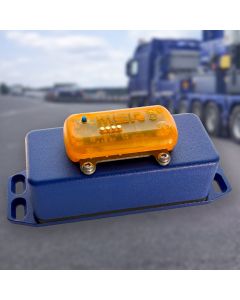
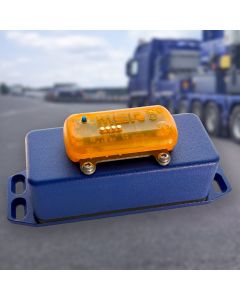
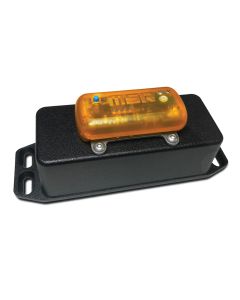
Talos Packaging Systems used an MSR165 to measure g-forces during road travel. The three-axis measurements were used to programme a transport simulator and reproduce real-life road conditions.
MSR shock data loggers record the time, direction and intensity of shocks and impacts in three axes, providing objective measurement data for transport-damage investigations, packaging optimization and quality assurance. Choose from reusable models with measuring ranges up to ±200 g, sampling rates up to 6,400 measurements per second, optional climate sensors, long-life batteries and GPS.
A suitable shock data logger depends on the expected acceleration range, the duration of the events, the required sampling rate, recording time and whether you also need temperature, humidity, pressure, light or GPS/GNSS position data.
| Model | Best suited for | Acceleration recording | Memory | Power | Additional measurements and features |
|---|---|---|---|---|---|
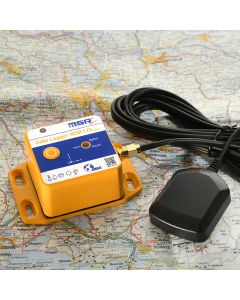
| MSR175plus | Shipments requiring simultaneous low- and high-g recording, climate measurements and event location | Two internal 3-axis accelerometers record simultaneously: ±200 g at 6,400 Hz and ±15 g at 1,600 Hz | More than 4 million measured values | Removable, rechargeable 2,400 mAh lithium-polymer battery | GPS/GNSS, temperature, relative humidity, air pressure, light and the MSR175 software package |
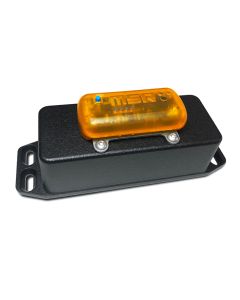
| MSR175Pro | Transformer and heavy-load transport; measurement tasks requiring selectable ranges and signal filtering | Internal 3-axis accelerometer with selectable ±10 g, ±20 g or ±40 g range; selectable rates from 4 Hz to 4,000 Hz | More than 2 million measured values | Replaceable Li-SOCl₂ battery; operating time at least 2 years | Temperature; anti-aliasing, decimation and high-pass filters. A separate climate version also measures humidity, pressure and light |
| MSR175 | Transport monitoring that does not require simultaneous recording of both acceleration ranges | Two internal 3-axis accelerometers. Select one shock mode: ±200 g at 6,400 Hz, ±200 g at 3,200 Hz, or ±15 g at 1,600 Hz | More than 2 million measured values | Rechargeable LiPo versions: up to 8 weeks. Separate variants with a replaceable Li-SOCl₂ battery: at least 2 years | Temperature is included; separate configurations also measure humidity, pressure and light. Includes reporting and shock-analysis software |
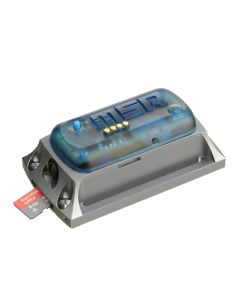
| MSR165 | Shock and continuous vibration measurements, long-term recording and configurable sensing | One internal or external 3-axis accelerometer: ±15 g or ±200 g; selectable from 25 Hz to 1,600 Hz; 32 readings recorded before a shock event | More than 2 million measured values; more than 1 billion with the optional microSD card | Depending on its battery and measurement settings, recording time can be up to 5 years | Optional temperature, humidity, pressure, light and analogue inputs; MSR ShockViewer |
Talos Packaging Systems used an MSR165 to measure g-forces during road travel. The three-axis measurements were used to programme a transport simulator and reproduce real-life road conditions.
MSR175plus loggers recorded shocks, climate values and GPS/GNSS position data. The stored position data allowed critical transport events to be localised.
Orbital Sciences installed ten MSR165 loggers with 3-axis acceleration sensors aboard Cygnus. The measurements were intended to record shocks and vibrations along the transport route to the International Space Station.
A shock indicator typically provides a visual indication that a threshold has been exceeded. A shock data logger measures and stores acceleration data, allowing recorded events to be reviewed after monitoring.
A shock is a short-duration acceleration event, such as an impact or drop. Vibration is repeated or continuous oscillatory motion. The required range, sampling rate and recording mode depend on which behaviour must be measured.
The MSR165 product guidance describes ±15 g as suitable for light shocks and vibration, including parcels and pallets. The ±200 g range is intended for strong, sudden shocks and impacts. Select a range that can capture the expected peak without unnecessarily sacrificing resolution.
Depending on the model and configuration, MSR loggers can also measure temperature, humidity, air pressure and light. The MSR175plus additionally records GPS/GNSS position data.
Recorded measurements can support damage analysis, claims documentation and a liability investigation. The data alone does not determine legal liability; that depends on the complete evidence and the applicable contract and law.